Good school and nursery cleaning comes down to three things: cleaning toilets, touch points, dining areas and changing areas properly every day, timing the work around the school day, and using people and products you can trust around children. February is a good time to review it. Winter bugs are going round, and the February half-term gives a short window for extra work. Here is what we would look at in any school or nursery in Cambridge and the surrounding villages.
Which areas matter most in school and nursery cleaning?
Not every room carries the same risk. These are the areas we put first:
- Toilets and washrooms: taps, flush handles, cubicle locks, the floor around toilets and urinals, and keeping soap and paper towels stocked. Children will not wash their hands if there is no soap.
- Touch points: door handles, push plates, banisters, light switches, shared keyboards and tablets, and in nurseries the toys that go in mouths.
- Dining areas: tables, chairs and floors after lunch, with tables cleaned again before any lessons or clubs use the hall.
- Nappy-change areas: changing mats and units disinfected, bins emptied, and the area kept clearly separate from food preparation.
Colour coding matters here. Cloths and mops used in toilets should never go near tables or kitchens, and a clear colour system makes that easy for every cleaner to follow.
When should cleaning happen around the school day?
Most of the main clean happens after pupils leave, from late afternoon into the evening. That gives floors time to dry before the morning. Toilets usually need a check in the day as well, and someone needs to deal with spills and sickness quickly. Nurseries open longer hours, so the work often splits between early mornings and evenings.
Clubs, lettings and parents’ evenings all affect the schedule. A good contractor will ask for the school calendar rather than guess.
What should a holiday deep clean include?
Holidays are when the jobs that cannot be done in term get done. A deep clean usually covers:
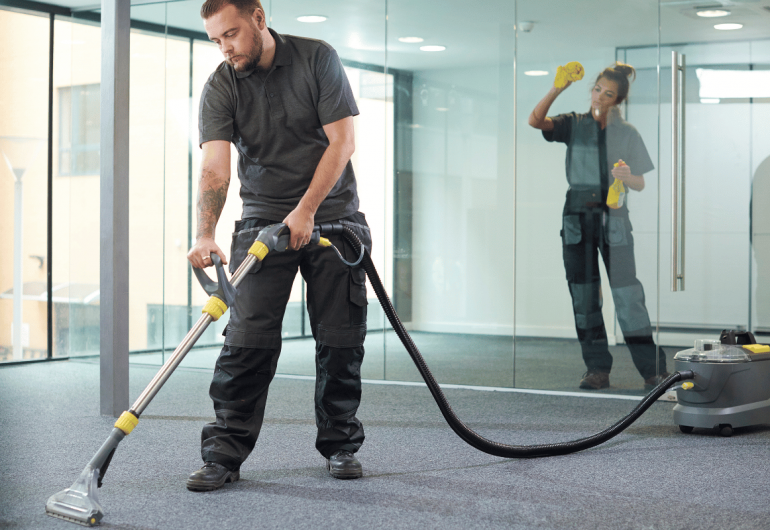
- carpets and soft seating, using hot water extraction
- high-level dusting of lights, vents and the tops of cupboards
- behind radiators, furniture and inside storage
- descaling washrooms and cleaning grout and partitions
- machine scrubbing hard floors
- kitchen and staff room deep cleans
The summer holiday is the big one. February half-term suits smaller jobs, such as carpets in the early years rooms or a washroom block.
What should you ask a cleaning contractor about staff and products?
Before you appoint anyone, ask about:
- what checks, including DBS, their staff have, and how that fits your safeguarding policy
- whether cleaners will be on site while children are present
- vetting, insurance and who supervises the team
- safety data sheets and how chemicals are stored, so nothing is left on a trolley in a corridor
- low-fragrance or eco-friendly products, especially around babies and children with asthma
- whether you will have the same cleaners each week
Frequently asked questions
How often should school toilets be cleaned?
A full clean at least once a day, with checks and restocking during the day in busy schools. Many schools add a check after break and lunch, when toilets get the heaviest use.
Do school cleaners need to be DBS checked?
It depends on the role and whether cleaners are on site while children are present. Ask your contractor what checks their staff have and agree the arrangement with your safeguarding lead.
Can deep cleaning be left to the school holidays?
Daily cleaning has to happen in term time, but holidays are the best time for deep cleans, carpet cleaning and hard floor work, when rooms can be emptied and left to dry.
How CamClean can help
We provide school and public sector cleaning in Cambridge and South Cambridgeshire, and our clients include South Cambridgeshire District Council and Kindred Nurseries. Our staff are vetted and insured, we use eco-friendly products where possible, and we can work early mornings, evenings and weekends. Call 01954 783308 or request a free, tailored quote.