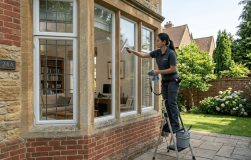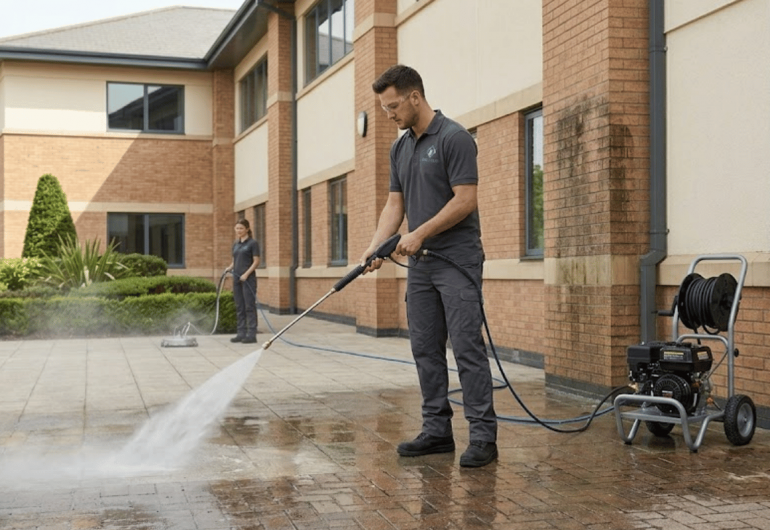
The right way to clean a patio is to scrape out weeds and moss first, wash it with a rotary surface cleaner at a sensible pressure rather than blasting it with a narrow jet, then rinse and re-sand the joints once it is dry. Spring is the best time to do it. The worst frosts are behind us, the moss is soft after the winter wet, and you get a clean patio ready for warmer weather. Here is how we approach patios and driveways for homes around Cambridge and Cambourne.
How to clean a patio properly, step by step
- Clear and check. Move furniture and pots, then look for loose slabs, cracked pointing and rocking blocks. Water gets under anything loose, so note it before you start.
- Dig out weeds and moss. Use a joint scraper or weeding knife along every gap, then sweep everything up. Pressure washing over weeds just spreads the roots.
- Treat stubborn growth. Black spots on sandstone are usually lichen. They will not come off with pressure alone and need a suitable treatment left to work.
- Wash with a surface cleaner. Keep the head moving at an even pace and work in one direction, towards where the water drains away.
- Rinse off the slurry. Wash the dirty water off the surface and keep it out of borders and away from door thresholds.
- Let it dry, then re-sand or re-point. Brush kiln-dried sand into block paving joints, or check slab pointing and repair where it has come out.
Slabs, block paving or resin: does it make a difference?
Yes, and most damage we see comes from treating every surface the same way.
Natural stone slabs
Indian sandstone is popular round here, but it is soft. Too much pressure lifts the surface and leaves pale stripes that never go away. Lower pressure, more patience.
Block paving and concrete
Block paving is tough, but the sand between the blocks is what holds it together. Washing removes some of it, so re-sanding is not optional. Skip it and the blocks start to move and weeds come straight back.
Resin-bound driveways
Resin needs low pressure and no harsh chemicals, as some products can discolour it. There are no joints to sand, so it is mostly a case of gentle, thorough washing.
What goes wrong with DIY pressure washing?
Home pressure washers are handy, but these are the problems we are often called in to sort out:
- stripes and etching from a pencil jet held too close
- pointing blasted out of slab joints
- block paving left without fresh sand, so it loosens
- water forced under door thresholds or against air bricks
- mud sprayed up walls, windows and the car
- slippery slurry left on the surface
How long does a clean patio stay clean?
It depends mostly on shade and drainage. An open, sunny patio can look good for two or three years. A north-facing one under trees, or one that holds puddles, can be going green again within a year. Regular sweeping, clearing leaves in autumn and pulling weeds while they are small all help. Most of our customers have their patio or driveway done every year or two in spring, often with gutter clearing or fascia cleaning at the same time.
Frequently asked questions
Should block paving be re-sanded after pressure washing?
Yes. Washing always takes some jointing sand out. Brushing kiln-dried sand back in once the surface is dry keeps the blocks tight and slows weeds coming back.
When is the best time of year to clean a patio?
Spring is the best time for most gardens. The hardest frosts have passed, moss is soft and easy to lift, and the surface has time to dry out before summer use.
Can pressure washing damage a patio?
It can if the pressure is too high or the nozzle is held too close, especially on sandstone and resin. A rotary surface cleaner set to suit the material avoids most of the damage we see.
How CamClean can help
If you would rather not hire a machine and spend the weekend on it, we offer patio and driveway cleaning in Cambridge and the CB23 and CB24 villages from £130, with re-sanding included. Call 01954 783308 or get in touch for a quote.