Commercial gutter cleaning is best done in late autumn, once most of the leaves have come down and before the heavy rain and frosts of winter. On business premises a blocked gutter is not just an overflow: it leads to damp walls, leaks into offices and stock rooms, ice on walkways and the kind of maintenance question insurers ask about. November is the month to get it done around Cambridge, when the trees on business parks and campus sites have mostly dropped their leaves.
What problems do blocked gutters cause on business premises?
- Damp and leaks. Water overflowing behind the gutter soaks into brickwork and shows up inside as damp patches, stained ceiling tiles and blown plaster, often well away from the gutter itself.
- Slip hazards. Overflow onto entrances, footpaths and car parks makes surfaces slippery and freezes overnight in winter. That is a real risk for staff and visitors.
- Damage to the building. Sodden debris and ice are heavy. They pull gutter joints apart, loosen brackets and rot timber fascias.
- Insurance and disputes. If water damage is traced back to blocked gutters, an insurer or landlord will want to know when they were last maintained.
How often should commercial gutter cleaning be done?
As a rule, at least once a year in late autumn. Buildings near trees, with moss on pitched roofs or with problems from nesting birds usually need a second clean in spring, and a quick check after storms. If your gutters have overflowed in the last year, that is a sign the current frequency is not enough.
Keep a simple record every time: the date, what was cleared, before and after photos, and any defects found, such as cracked joints, sagging runs or missing outlet guards. Ask your contractor to provide this. It builds a maintenance history that is useful for insurance, lease obligations and planning repairs before they become urgent.
What about flat roofs and roof outlets?
Many offices, schools and industrial units have flat roofs, parapet walls and box gutters rather than simple gutters at the eaves. These need more attention, not less:
- Leaves and silt collect around outlets, and once an outlet blocks, water ponds on the roof and finds its way through any weak spot in the membrane.
- Box gutters behind parapets overflow into the building, not down the outside wall, so a blockage can mean water through the ceiling.
- Outlet grates go missing. Without one, debris goes down the pipe and blocks it inside the building, where it is much harder to clear.
How do you plan safe access for gutter work?
Gutter work is work at height, so plan it properly:
- Decide what can be cleared from the ground with high-reach equipment and what needs roof access.
- Check the roof access route, edge protection and any fragile roof lights before anyone goes up.
- For higher eaves, arrange a mobile platform and somewhere safe to set it up.
- Agree times with the facilities team, keep parking bays clear below and cordon off entrances if needed.
- Consider evening or weekend visits for busy sites so the work does not affect staff or customers.
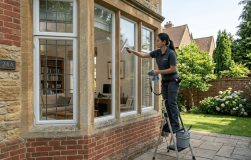
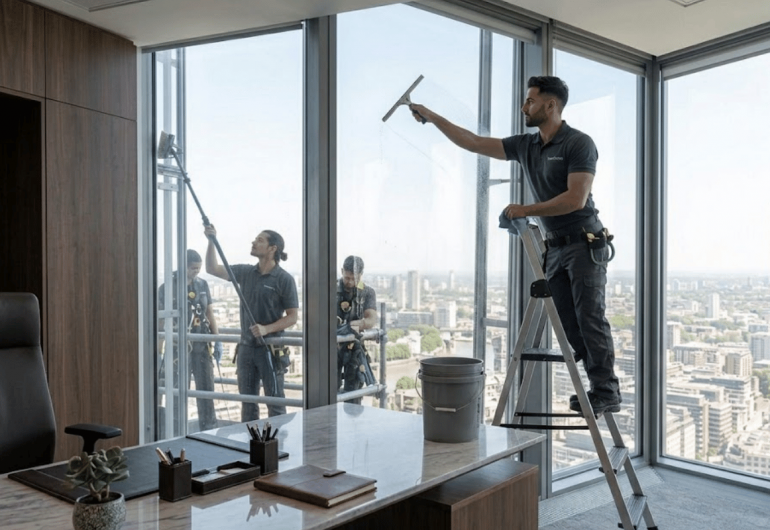
The same visit is a good moment to book commercial window cleaning, or pressure washing for paths that have turned green over the autumn.
Frequently asked questions
When is the best time for commercial gutter cleaning?
Late autumn, once most of the leaves have fallen and before the worst winter weather. Buildings near trees benefit from a second clean in spring.
Can gutters be cleaned without going on the roof?
Often, yes. Many gutters can be cleared from the ground with high-reach equipment. Flat roof outlets, box gutters and parapets usually need safe roof access.
What records should we keep of gutter cleaning?
Keep the date, what was cleared, before and after photos and any defects found. It helps with insurance queries, landlord and tenant questions and maintenance budgets.
How CamClean can help
We provide commercial gutter cleaning in Cambridge, Cambourne and the surrounding towns for offices, schools, science parks and business units. Our staff are vetted and insured, and we can work outside your opening hours. Call 01954 783308 or ask for a free, tailored quote.