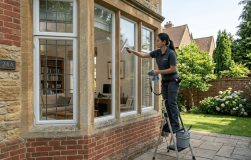
Commercial pressure washing keeps the outside of your business safe and presentable by removing algae, moss, chewing gum, oil and grime from paths, entrances, car parks and bin stores. For most businesses, a thorough clean once or twice a year, with busy entrances done more often, keeps slip risks down and the site looking cared for. The work can be done out of hours, so staff and customers are not disrupted.
Why green paving is a slip hazard
Algae and moss grow wherever paving stays damp: shaded paths, north-facing entrances, areas under trees and anywhere water pools after rain. In dry weather it looks harmless, but once it is wet the surface can be as slippery as a wet tile. It is one of the easiest site hazards to spot and fix. Walk round and check:
- Main entrances, ramps and steps, especially the nosing on each step
- Fire exit routes and paths around the back of the building
- Smoking shelters and staff break areas
- Walkways across the car park to the front door
Washing removes the growth, but spores come back. Where it is appropriate for the surface, a treatment applied afterwards slows the regrowth and stretches the time between cleans.
Chewing gum, oil and bin stores
Each needs a different approach, which is why blasting everything at full pressure rarely works best.
Chewing gum gets trodden flat and turns black. It usually needs hot water or steam to soften it, because cold high pressure can etch the paving around the gum and leave a pale ring. Oil and fuel stains in car parks soak into tarmac and block paving. A degreaser left to work before washing helps a lot, although old stains may only lighten. Bin stores collect leaking bags and food waste, and in warm weather they draw flies and smell. A hot wash and sanitising treatment makes a real difference, and June is exactly when people start to notice. On block paving, washing can lift the jointing sand, so allow for re-sanding afterwards.
How often does a site need commercial pressure washing?
There is no single answer, but as practical guidance:
- Busy entrances, shop fronts and smoking areas: every 3 to 6 months
- Car parks and general paving: once or twice a year
- Bin stores: every few months, more often through the summer
- Shaded paths prone to algae: before autumn, so they go into the wet months clean
Late spring and early summer are good times for a full wash because surfaces dry quickly. A top-up before winter then keeps entrances safer through the wettest months. Clearing gutters at the same time helps too, as overflowing gutters are a common reason paving below stays green.
Out-of-hours working, run-off and drainage
Pressure washing is noisy and leaves surfaces wet, so most business sites in Cambridge and around Cambourne are best done early in the morning, in the evening or at the weekend, with areas coned off while they dry. Car parks need to be empty of vehicles, so warn staff a few days ahead.
Run-off needs proper thought. Water from a car park or bin store carries oil, detergent and food waste, and it should not just be sent into surface water drains, which often lead straight to ditches and watercourses. Before the work starts, we talk through where your drains go and agree how dirty water will be handled, for example by covering drains or collecting the water. If your site has interceptors or its own environmental rules, tell us when you ask for a quote.
Frequently asked questions
Will pressure washing damage our paving?
Not if the pressure and nozzle suit the surface. Soft stone, old pointing and some coatings need lower pressure or a different method, so we check the surfaces before starting.
Can you clean while we are open?
Small areas can be done with cones and barriers in place. Car parks, entrances and anything near customers are better done early in the morning, in the evening or at the weekend.
How long does it stay clean?
It depends on shade, trees and footfall. Regular maintenance washes are quicker and cheaper than a full restoration once the growth has taken hold.
How CamClean can help
We provide commercial pressure washing across Cambridge and nearby towns for offices, schools, science parks and shared sites, working around your opening hours. Our staff are vetted and insured, and we use eco-friendly products where possible. Call 01954 783308 or request a free, tailored quote.